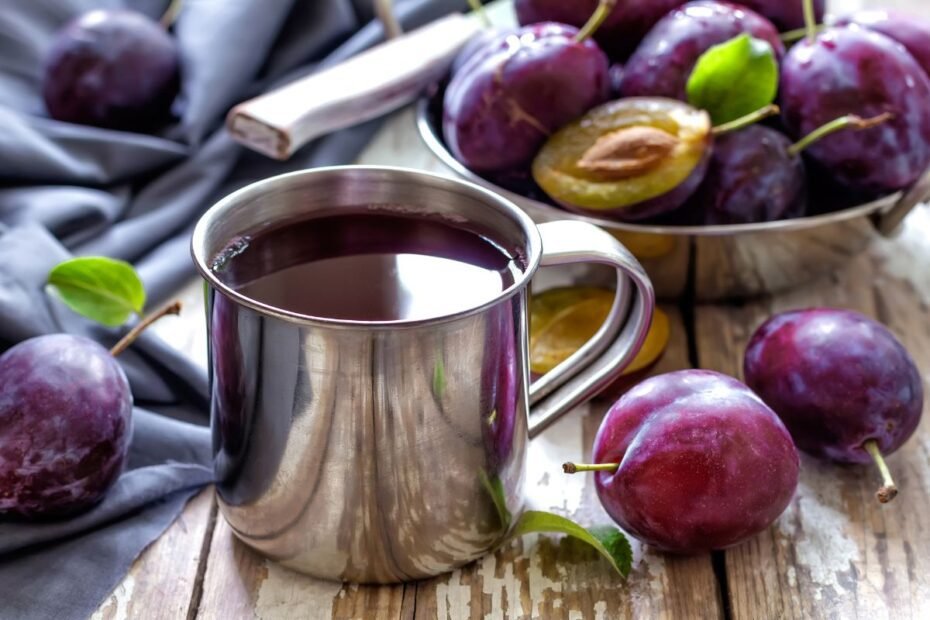
Deep blue, purple, red, yellow… Yes, these are plums! Dozens of stone fruit varieties thrive and bear fruit successfully in many countries. Plums represent the transition from late summer to autumn. Depending on the variety, plums ripen in orchards from late July, with harvesting continuing until October. Most people are familiar with the taste of plums and their versatile culinary applications. Likely, it’s also common knowledge that plums contain valuable nutrients and can contribute to improved health. Plum juice offers another excellent way to incorporate these fruits into your diet. This article explores the primary plum juice benefits and discusses the healthiest varieties for optimal wellness.
Plum Juice: A Source of Essential Nutrients
Consuming one cup (approximately 240 ml) of freshly pressed plum juice enriches your body with dietary fiber, vitamins A, B, and K, and various minerals, including potassium, iron, phosphorus, copper, zinc, magnesium, and boron.
While plum juice contains significant sugar content, it has a low glycemic index, meaning it doesn’t cause dramatic spikes in blood sugar levels. Although this makes plum juice a good energy source, moderation remains advisable.
One of the main plum juice benefits relates to constipation alleviation. This property stems from its high fiber content. However, dried plums contain even higher amounts of fiber, making them even more effective for addressing this issue. Juice can also be prepared from dried plums.
Plum Juice Benefits: A Tool for Chronic Disease Prevention
Scientific research involving humans and animals has yielded data on plum juice’s health benefits. These advantages stem from the active properties of nutrients in plums, which positively affect human physiology and healthy functioning. The following health areas may experience the most significant impact from plum juice consumption:
- Plum juice may prevent osteoporosis associated with female menopause or induced by radiation treatment.
- This juice can help slow atherosclerosis development, as the pectin (a type of fiber) it contains may reduce the amount of cholesterol absorbed by the body.
- Plum juice positively influences the digestive system and can prevent chronic constipation.
- Juice from plum consumption improves gut microbiota by increasing beneficial intestinal bacteria populations.
- The antioxidants in plums strengthen immunity and overall bodily resistance. They also provide anti-inflammatory effects.

Plum Juice Benefits: Alleviating Chronic Constipation
Traditional healing practices have long incorporated plums and their juice as a natural solution for digestive regularity. Scientists confirm this property, reasonably attributing the laxative effect to fiber and the high sorbitol content of the plums.
Plum juice consumption activates the digestive system. This improves intestinal function, enhances metabolism, and normalizes bowel movements. Research indicates that individuals with chronic constipation improve their digestion by drinking half a cup of fresh plum juice each morning. Consuming another half cup of plum juice thirty minutes after a substantial meal stimulates intestinal activity and facilitates bowel movements.
Make a mixture combining equal parts (one cup each) of plum juice, apple juice, and oat bran for particularly troublesome and life-limiting constipation issues. You should consume this mixture every evening, 1-2 tablespoons at a time, followed by a glass of water.

The Healthiest Plum Juices: Preparation, Consumption, and Storage
Natural, freshly pressed juices offer the maximum health benefits. Plum juice is no exception. Home preparation and immediate consumption are ideal for maximizing the benefits from this juice. Slightly chilling plum juice before drinking is recommended. Leftover plum juice can be stored in an airtight container in the refrigerator for up to 5 days.
If you have an abundance of plums and don’t wish to use them for jam or preserves, you can prepare other valuable reserves:
- Extract plum juice, preferably retaining some pulp, transfer to plastic bottles or bags, and freeze.
- Cut plums lengthwise in half, remove pits, and freeze in small quantities. Thawed plums can also be used for juice preparation.
- Dry plums in an oven or a fruit dehydrator. Dried plums contain even more fiber. They can be used for various dishes or juice preparation.

Fresh Plum Juice
Anyone can prepare fresh, delicious, and healthy juice from plum at home. There are two methods: extracting juice using a juicer or a blender. Depending on which appliance you use, the consistency will differ. If the juicer separates pulp, the juice will be transparent and liquid. Blender-prepared juice will be thicker but healthier, containing significantly more fiber. Below is a recipe for preparing a cup of thick, fiber-rich fresh plum beverage. This recipe works best using a blender.
Ingredients:
- 4 large, well-ripened plums
- ½ cup water
- Juice from 1 small lemon
- Ice cubes
Preparation:
- Thoroughly wash the plums, cut them in half, remove the pits, and place them in a blender.
- Squeeze the lemon juice and add it to the blender.
- Add water and blend until smooth.
- Place ice cubes in a glass and pour in the prepared juice.
- If the juice tastes too tart, you may add some honey.
- Serve and enjoy.

Dried Plum or Prune Juice Recipe
Plums’ strength is in their fiber content, which is even more pronounced in dried plums. Due to the high concentration of these substances, dried plums are often the first choice for constipation relief. Beyond their universal culinary applications, you can also use dried plums to prepare fiber-rich dried prune juice. To prepare this beverage, you’ll need:
Ingredients:
- 5-6 dried plums
- 240 ml (1 cup) hot water or apple juice
- Optional spices: ground ginger, cinnamon, cardamom, etc.
Preparation:
- Place dried plums in a bowl and cover with hot water or apple juice.
- Soak the plums for approximately 30 minutes.
- Transfer the soaked plums with the liquid to a blender, add spices, and pour another half cup of water.
- Blend everything until smooth.
- Allow to cool before drinking, pour into a glass, and serve.

When Plum Juice May Have Unwanted Effects
Despite the myriad wellness advantages associated with plums and their juice, certain individuals may experience adverse reactions in some circumstances. One common unpleasant symptom, especially with excessive consumption, is abdominal bloating. This symptom arises from the sorbitol present in fresh plums. If you have a sensitive digestive system to this substance, try a better alternative from dried plums and their juice.
This juice should not be consumed during episodes of diarrhea. It may exacerbate the condition, potentially increasing the risk of excessive fluid and mineral loss.
Those with diabetes or following special weight-management diets should limit plum juice consumption. It contains substantial natural sugar, so it’s advisable to consult a physician regarding appropriate plum juice quantities.
Plum juice may also be unsuitable for individuals following low-potassium diets. This is particularly relevant for people with kidney disease.
Very rarely, plum allergies can occur. If allergy symptoms such as itching, rash, lip swelling, etc. develop after consuming plums or drinking their juice, discontinue use and consult a doctor.

Sources:
- https://www.healthline.com/health/food-nutrition/top-benefits-of-prunes-prune-juice
- https://www.medicalnewstoday.com/articles/315340
- https://www.researchgate.net/publication/298899398_A_Systematic_Review_on_the_Health_Effects_of_Plums_Prunus
Associative photos © Canva