
Soursop juice (also known as graviola juice, or even guanabana juice) stands out for its exotic character and impressive range of naturally occurring nutrients. The fruit appeals not only with its sweet, tropical aroma but also with the potential medicinal properties that have attracted scientific interest. Researchers have studied juice made from soursop (Annona muricata) in various medical and nutritional contexts, yet some of the claims surrounding its effects remain controversial.
Despite the mixed evidence, soursop juice can still add nutritional compounds to the diet. Let’s take a closer look at its potential benefits and side effects, as well as the easiest ways to prepare or purchase this distinctive tropical drink.
What Is Soursop?
If the term “soursop juice” sounds unfamiliar, it helps to start with the fruit itself. Soursop (Annona muricata) belongs to the Annonaceae family and grows in tropical and subtropical regions. The fruit also goes by names such as graviola and guanabana in different languages and markets. In English, however, soursop represents the most widely used common name.
Soursop comes from the fruit of Annona muricata, which has soft, white, sweet-and-sour flesh, green spiny skin, and large black seeds. The fruit also has a strong and distinctive aroma. Soursop trees grow naturally in parts of South America, the Caribbean, Southeast Asia, and Africa, while the fruit and products made from it have also become increasingly available in other countries.
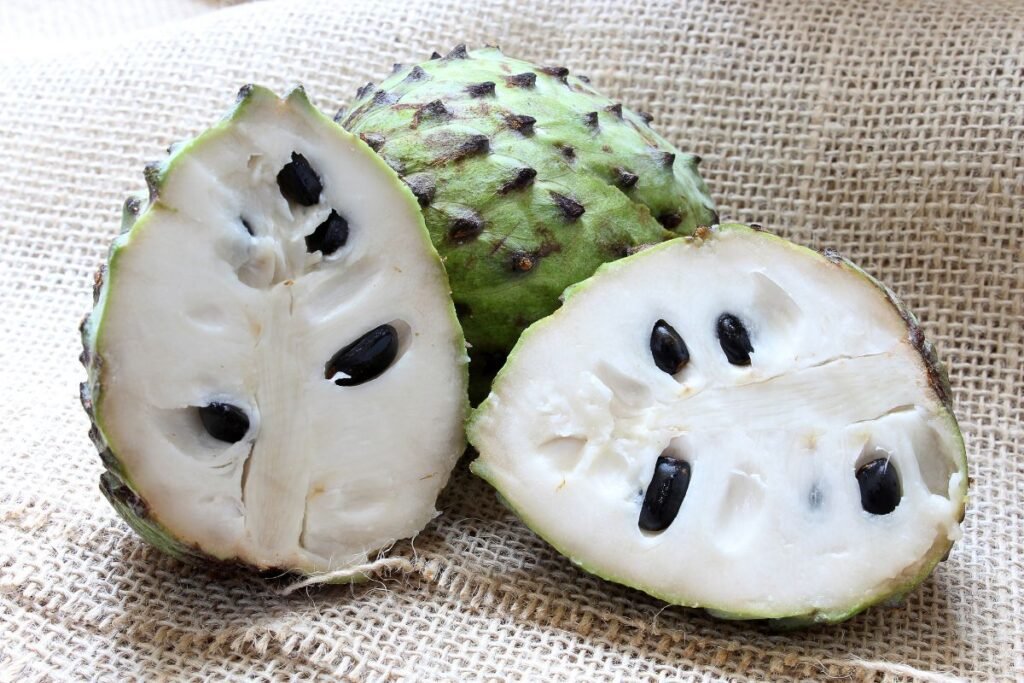
Graviola Juice Has a Distinctive Taste and Texture
Soursop juice has its own unusual combination of flavor, aroma, color, and texture. Freshly prepared juice typically has the following characteristics:
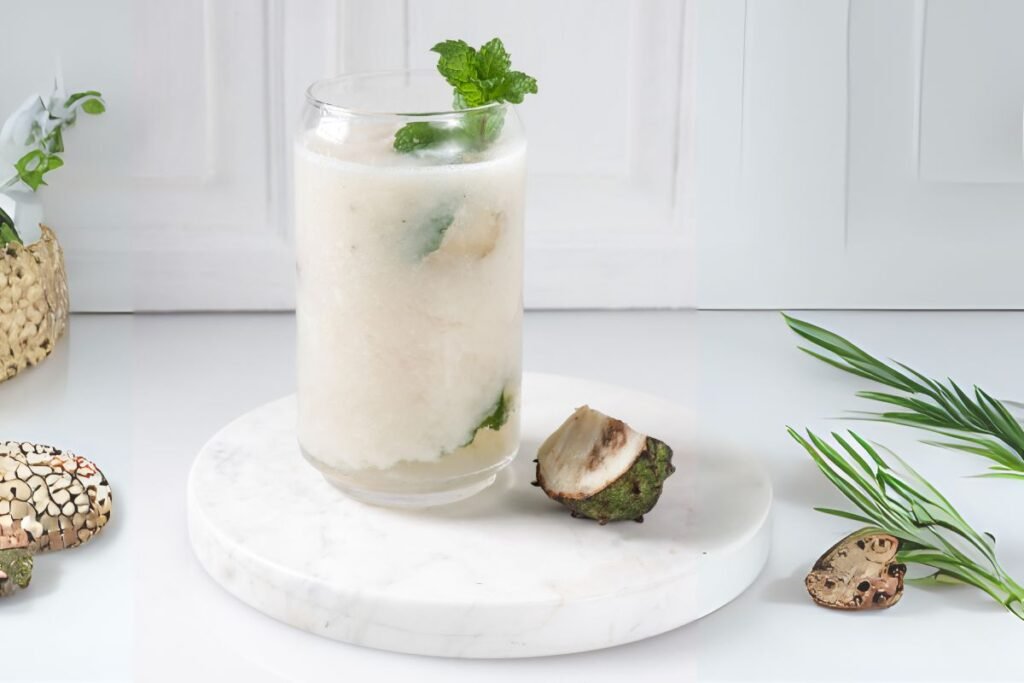
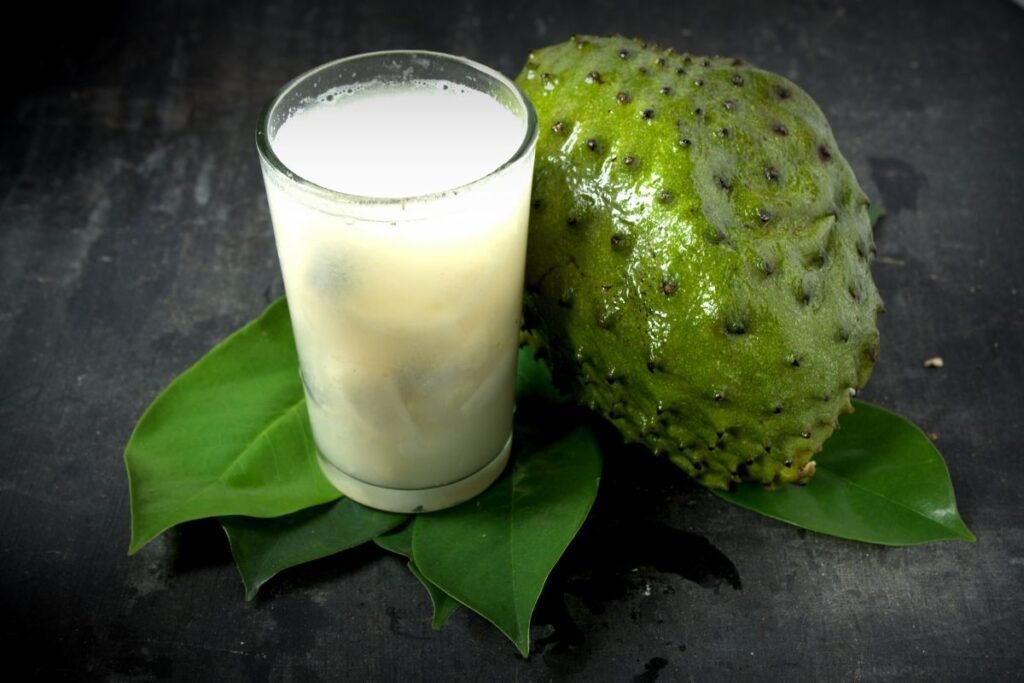
- Milky white to pale yellow in color. Fresh soursop juice usually appears creamy white or light yellow. It may sometimes take on a slightly greenish hue when the juice retains more fruit pulp.
- Cloudy and opaque appearance. Soursop juice rarely looks clear because the fruit contains soft, fibrous pulp. It also tends to produce little or no foam.
- Thick and smooth consistency. The juice can feel slightly viscous and resemble a milkshake or thick fruit purée.
Although its creamy texture contributes to its appeal, the aroma provides soursop juice much of its distinctive character. People often describe it as a tropical combination of pineapple, strawberry, banana, and citrus. Subtle floral and vanilla notes can also emerge, while some people associate its aroma with bubble gum or sweet guava.
The flavor offers an equally unusual balance of sweetness and acidity. Its sweet notes may remind you of strawberries and cream or a citrus sorbet, while the sharper side can resemble green apple, kiwi, or lemon. Tropical undertones often bring pineapple, banana, or even mango.
More sensitive palates may notice a mild bitterness, particularly when the juice contains traces of the fruit’s skin. Despite this complexity, soursop juice generally leaves a pleasant, creamy sensation that lingers in the mouth.
Many people find the juice refreshing, although its thick consistency can feel heavy when consumed in large quantities.
Soursop Juice: What Nutritional Properties Can It Offer?
Soursop juice can captivate the palate not only with its distinctive aroma and flavor but also with its wealth of nutrients and bioactive compounds. Table 1 provides an approximate estimate of the nutritional value of 100 ml of soursop juice. The actual composition can vary depending on the fruit’s ripeness and origin, the processing method, and whether the juice has been filtered.
| Nutrient / Compound | Amount (per 100 ml) | % RI (per 100 ml) |
| Energy | ~54 kcal | – |
| Carbohydrates (total) | ~13.2 g | ~5% |
| • Natural sugars | ~12 g | – |
| Dietary fiber (soluble) | ~1.0 g | ~4% |
| Protein | ~0.4 g | <1% |
| Fat (total) | ~0.12 g | <1% |
| Vitamin C | ~20 mg | ~25% |
| Vitamin B1 (thiamine) | ~0.06 mg | ~5% |
| Vitamin B2 (riboflavin) | ~0.04 mg | ~3% |
| Vitamin B3 (niacin) | ~0.6 mg | ~4% |
| Folate (B9) | ~6 mcg | ~2% |
| Potassium (K) | ~240 mg | ~12% |
| Magnesium (Mg) | ~12 mg | ~3% |
| Iron (Fe) | ~0.24 mg | ~2% |
| Calcium (Ca) | ~10 mg | ~1% |
| Phosphorus (P) | ~8 mg | ~1% |
Soursop juice offers more than an appealing aroma and flavor. It also contains a range of nutrients and bioactive compounds. These include acetogenins, polyphenols, and flavonoids, which may contribute to various biological effects, including those associated with immune and digestive health.
Soursop Juice Benefits
People in tropical countries have traditionally consumed soursop juice due to its nutritional profile and bioactive compounds, which may offer a variety of health benefits. While scientific research supports some of these potential effects, others still rely largely on traditional medicine and preliminary evidence. Here are some of the main potential benefits:
- Supports the immune system. With 20 mg of vitamin C per 100 ml, soursop juice can normalize the body’s immune function and antioxidant defenses against free radicals.
- Regulates blood pressure. Soursop contains potassium, a mineral that helps maintain normal blood pressure. Potassium also counteracts some of the effects of sodium by supporting normal blood vessel function. One human study involving 143 participants found that consuming 200 ml of soursop juice daily for three months reduced blood pressure compared with the control group.
- Antibacterial and antiviral properties. In vitro studies suggest that soursop extracts can act against bacteria such as E. coli, Staphylococcus aureus, and Streptococcus, and against certain influenza virus strains. Researchers often associate these effects with acetogenins and other plant alkaloids.
- Support digestion and gut health. The fiber and other compounds found in soursop may support normal digestion and bowel function. Soursop has traditionally been used to help relieve constipation and promote digestion.
- Has anti-inflammatory effects. Flavonoids and polyphenols can act as natural anti-inflammatory compounds. Traditional medicine has used soursop to relieve joint discomfort and address various abdominal inflammatory conditions and infections.
- Potential anticancer effects. Laboratory studies suggest that soursop acetogenins may inhibit the growth of certain cancer cells, particularly those associated with breast, pancreatic, and liver cancers. However, researchers have not yet established these effects in clinical human trials.
- Blood sugar control. Some animal studies suggest that soursop may help lower blood glucose levels. This finding could be relevant to prediabetes.
Make Graviola Juice at Home
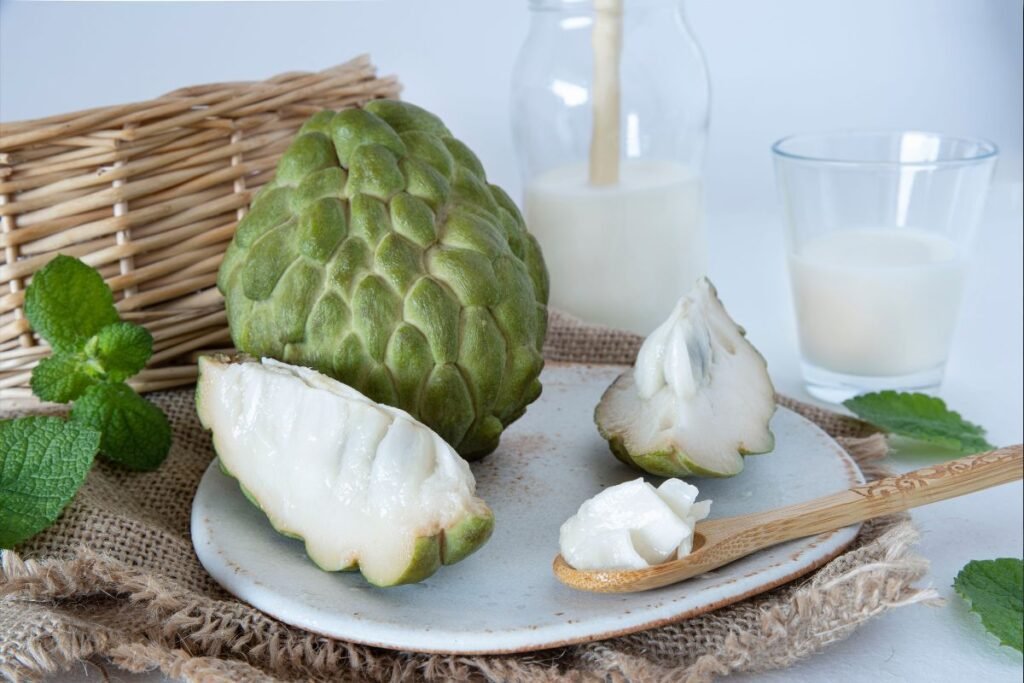
You can easily buy soursop juice in a supermarket, but making it at home offers a more interesting alternative. Finding fresh soursop fruit may prove challenging, but the result can make the effort worthwhile in every sense.
Ingredients:
- 1 medium-sized ripe soursop fruit (approximately 1–1.5 kg)
- 500–700 ml cold water (or coconut water for a richer flavor)
- (Optional) 1–2 tablespoons honey, agave syrup, or another natural sweetener
- (Optional) A few drops of lemon or lime juice for extra freshness
Preparation:
- Wash the soursop and cut it in half.
- Scoop out the flesh with a spoon or your hands. Remove all the seeds, as they are not suitable for consumption and contain toxic compounds.
- Place the fruit flesh in a blender.
- Add cold water, using 500–700 ml depending on how thick you want the juice.
- Blend for 30–60 seconds until smooth and creamy.
- Strain the juice through a fine-mesh sieve or cheesecloth if you prefer a smoother drink with less pulp and fiber.
- Sweeten to taste with honey or agave syrup and, if desired, add a little lemon juice.
- Serve chilled. You can add ice or keep the juice refrigerated for 1–2 days.
How Much Graviola Juice Should You Drink?
Although it may seem like an ordinary fruit drink, you should not consume soursop juice without limits. Because of its potential adverse effects, you should drink it cautiously and in moderation.
A commonly suggested intake for general use ranges from 100 to 150 ml per day, with an upper limit of 250 ml. The higher amount applies only to short-term consumption, generally for up to 2–4 weeks. For longer use, particularly beyond one month, some recommendations suggest limiting intake to no more than 100 ml per day and taking periodic breaks, such as three weeks of use followed by one week off. You can also divide the daily amount into smaller 50–100 ml servings taken once or twice before meals.
Experts recommend that you:
- Choose fresh, minimally processed juice rather than juice made from concentrate.
- Keep the juice refrigerated and consume it within 24–48 hours.
- Avoid boiling or heating it, as heat may degrade some of its bioactive compounds.
- Start with a small amount, such as 50 ml, and monitor how your body responds.
- Never consume the juice together with the seeds, which contain neurotoxic compounds.
- Dilute it with water or other fruit juices, such as lime or apple juice, if you find the flavor too strong.

Potential Side Effects of Soursop Juice
Unfortunately, the limited number of clinical studies, combined with concerns about potential neurotoxic effects, makes soursop juice a questionable choice for some people. Several factors may affect its safety, so it is worth understanding when you should avoid soursop juice and what unwanted effects it may cause.
- Potential neurotoxicity: Laboratory research has linked annonaceous acetogenins, particularly compounds concentrated in the seeds, with neurotoxic effects and Parkinsonism-like symptoms. Some researchers have raised concerns about long-term exposure in populations where people traditionally consume products made from soursop and related plants. People with neurological disorders should therefore avoid soursop products unless a healthcare professional advises otherwise.
- Pregnancy, breastfeeding, and childhood: Pregnant and breastfeeding women and children under 12 should avoid soursop juice because safety data remain limited. Researchers have also raised concerns that compounds in the fruit may affect uterine activity.
- Possible drug interactions: People taking antihypertensive or blood-glucose-lowering medicines should discuss soursop juice with their doctor or pharmacist before drinking it. The juice may enhance the effects of these medicines and potentially lower blood pressure or blood glucose too much.
- Digestive symptoms: Drinking large amounts or consuming soursop juice on an empty stomach may cause nausea, diarrhea, bloating, or abdominal cramps in some people.
- Potential genotoxic effects: Some studies suggest that acetogenins may damage cellular DNA, which raises concerns about their long-term safety. Researchers have not established this effect in humans, however, and the potential genotoxicity of these compounds remains under investigation.
- Concerns about long-term exposure: Some acetogenins can persist in the body and may affect the nervous system. For this reason, prolonged consumption of soursop juice without breaks or medical supervision may not be advisable.
Sources:
- https://www.healthline.com/nutrition/soursop-benefits
- https://www.health.com/soursop-8572246
- https://www.mdpi.com/2072-6643/15/2/402
- https://pmc.ncbi.nlm.nih.gov/articles/PMC9968120
- https://pmc.ncbi.nlm.nih.gov/articles/PMC8878098
- https://www.sciencedirect.com/science/article/abs/pii/B9780128166796000139
Associative photos © Canva.