
Spinach is a leafy vegetable classified among greens. Alongside lettuce, sorrel, and other leafy plants, spinach is a common ingredient in a wide variety of dishes, including salads, stews, soups, and various fillings. People also often use it to enrich cottage cheese. One of the less commonly prepared products is spinach juice. As interest in healthy living continues to rise, spinach juice is experiencing a resurgence in popularity. Nutritionists use this vegetable as an essential component of nutritious green smoothies, and frequently blend it with other vegetables, berries, or fruit juices.
This article explores the benefits of spinach juice in greater detail—how much to consume, the potential health advantages, and circumstances you should avoid it.
Spinach: A Vegetable with Thousands of Years of History
Historical evidence indicates that spinach was first cultivated over 2,000 years ago in the Persian region, now known as Iran. From there, it spread to other parts of the world. Spinach made its European debut in the 14th century, with early mentions in England and France. People quickly valued it as a nutritious early spring green, helping to supplement the diet at a time when few other fresh vegetables were available. Notably, spinach appears in The Forme of Cury, the earliest known English cookbook, published in 1390.
Spinach juice has also been recognized for its medicinal properties. An interesting historical note: During World War I, people mixed spinach juice with wine and administered this drink to wounded soldiers to help reduce blood loss. This practice was based on the belief that the high vitamin K content in spinach could help thicken the blood and promote clotting.

The Nutritional Value of Spinach Juice
Spinach is a low-calorie vegetable—100 grams contains only about 23 calories. Despite this, it is rich in essential vitamins and minerals. Spinach provides generous amounts of vitamins C, A, E, and K, along with B vitamins such as B6 (pyridoxine) and B9 (folate). It is also an excellent source of vital minerals like potassium, calcium, magnesium, manganese, and iron, as well as dietary fiber.
Spinach juice supports overall health, strengthens the immune system, and can help ward off illness. It is especially beneficial for digestive health due to its mild laxative effect. However, it is worth noting that spinach also contains a significant amount of oxalic acid, which can inhibit the absorption of iron and calcium. When consumed in large quantities, oxalic acid may contribute to the formation of kidney stones.
Spinach Juice: A Natural Source of Antioxidants
Spinach juice is an excellent way to boost your intake of essential antioxidants. These compounds play a crucial role in human health by protecting the body from oxidative stress caused by free radicals—unstable molecules that can damage cells and contribute to chronic diseases.
Spinach juice contains powerful antioxidants: lutein, beta-carotene, coumaric acid, violaxanthin, and ferulic acid. In one small-scale study involving eight participants, drinking 240 ml of spinach juice daily for 16 days was associated with a measurable reduction in oxidative cellular damage.
Preliminary research also suggests that certain compounds found in spinach juice may offer protective benefits against cancer. However, more robust scientific evidence is needed to confirm these findings.
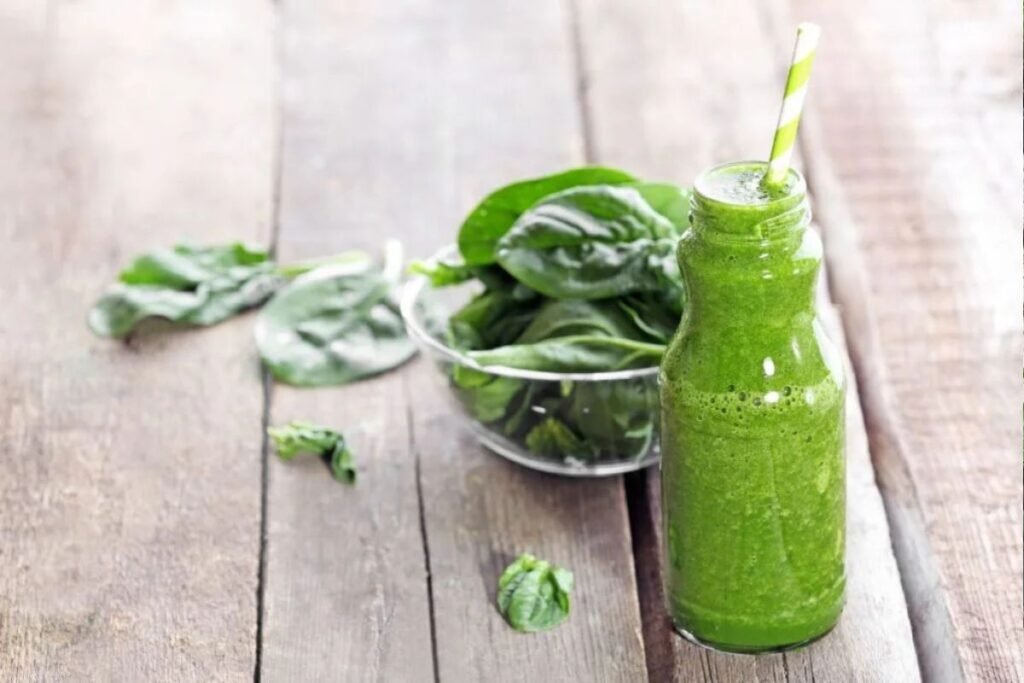
Spinach Juice and Eye Health
Spinach juice is particularly beneficial for eye health due to its content of two key antioxidants—lutein and zeaxanthin—which are essential for maintaining healthy vision. Studies suggest that these compounds may help reduce the risk of age-related macular degeneration (AMD). A review of six clinical trials concluded that adequate intake of lutein and zeaxanthin is associated with a lower risk of developing cataracts.
In addition, spinach juice is rich in vitamin A, which is essential for eyesight. This vitamin deficiency may lead to eye dryness and poor night vision. A 240 ml serving of spinach juice provides nearly 63% of the recommended daily intake of vitamin A.
Spinach Juice May Help Regulate Blood Pressure
Like many other leafy greens, spinach contains a notable amount of dietary nitrates. These compounds have several health benefits—chief among them is their ability to promote the production of nitric oxide in blood vessels. This, in turn, helps relax and dilate the vessels, improving circulation and reducing blood pressure.
Even clinical studies confirmed this blood pressure-lowering effect. In one 7-day study, 27 participants consumed spinach soup daily. The results showed a reduction in blood pressure and improved vascular elasticity compared to those who did not consume spinach. In another group, regular spinach consumption was linked to a decrease in systolic (upper) blood pressure.
Spinach Juice for Healthy Hair and Skin
Thanks to its rich nutrient profile—including high levels of vitamins A, C, and E, along with potent antioxidants—spinach juice can support healthy skin and hair. These nutrients aid in the regeneration of skin cells, protect against infections, and slow the signs of aging.
Research indicates that sufficient intake of vitamins C, A, and E helps shield the skin from oxidative damage. These vitamins also play a role in collagen synthesis, which is essential for wound healing and maintaining skin elasticity. Vitamin C enhances iron absorption and may help prevent hair loss associated with iron deficiency.

Spinach: A Key Ingredient in Healthy Smoothies
Spinach juice has a mild taste and a vibrant green color. To extract it properly, it’s best to use a slow juicer designed for leafy greens or a high-powered blender (or a food processor with a blending function). When using a blender, it’s crucial to add a small amount of water along with the spinach leaves. You should strain the blended mixture through a cheesecloth or fine mesh bag to remove fiber and foam. It makes your juice smoother.
Spinach juice should always be consumed fresh and unpasteurized. It’s not suitable for heat processing (such as boiling or freezing), as this depletes its nutritional value. Additionally, heating spinach juice increases its oxalic acid content, which may elevate the risk of kidney stone formation when consumed in larger amounts.
Spinach juice is rarely consumed on its own. More often, people include it as part of mixed juice blends or smoothies. To create a flavorful and well-balanced smoothie, it’s best to combine ingredients with sweet, tart, bitter, and neutral profiles. Below are a few combinations to help incorporate spinach juice into your daily routine.
What Pairs Well with Spinach Juice?
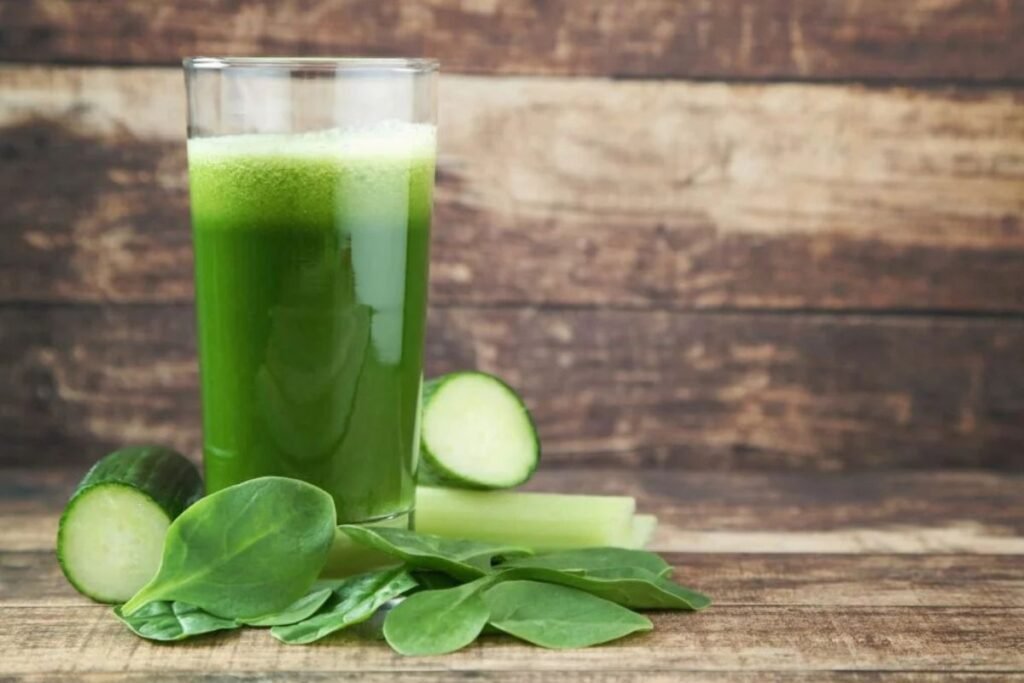
Spinach juice is a popular base for green smoothies and pairs well with other juices made from kale, celery, or green apples. These combinations not only nourish the body but may also provide gentle detoxifying effects. Also, try to blend spinach juice with a wide variety of vegetables, fruits, and berries. Here are a few creative combinations:
- A juice blend of spinach, celery, carrots, tomatoes, and onions.
- A mix of lettuce, carrots, and spinach juice—especially beneficial for strengthening hair.
- A vibrant, vitamin-rich blend of young dandelion leaves, cucumbers, lettuce, and spinach juice, known to stimulate appetite, support digestion, and provide a natural energy boost.
- A refreshing and slightly sweet combination of spinach, apples, and pineapple juice.
You may expand this list of spinach juice smoothie ideas endlessly depending on personal taste, preferences, and nutritional goals. Ideally, juice blends should be consumed immediately after preparation. If that’s not possible, they can be stored in the refrigerator for up to three days.
Potential Drawbacks of Spinach Beverages
While spinach juice is generally safe to consume, moderation is key. Drinking it two to three times per week is enough to enrich your diet with its valuable nutrients. However, in some health situations, intake may need to be more limited. It’s best to consult a healthcare provider before incorporating spinach juice regularly, especially in the following cases:
- If you are taking blood-thinning medications, the high vitamin K content in spinach may interfere with their effectiveness.
- You are on blood pressure medications, because spinach’s natural ability to lower blood pressure could amplify the effects of the drugs, leading to dangerously low blood pressure.
- If you have a history of kidney stones or are prone to them, the oxalic acid in spinach can increase the risk of stone formation.
- If you have a spinach allergy, in which case, you should avoid even small amounts of spinach juice.
Sources:
- https://link.springer.com/chapter/10.1007/978-1-4615-6015-9_21
- http://www.vegetablefacts.net/vegetable-history/spinach-history
- https://pubmed.ncbi.nlm.nih.gov/21384253
- https://www.ncbi.nlm.nih.gov/pmc/articles/PMC3999804
- https://fdc.nal.usda.gov/fdc-app.html
- https://www.ncbi.nlm.nih.gov/pmc/articles/PMC4525132
- https://www.healthline.com/nutrition/spinach-juice-benefits
Associative photos © Canva