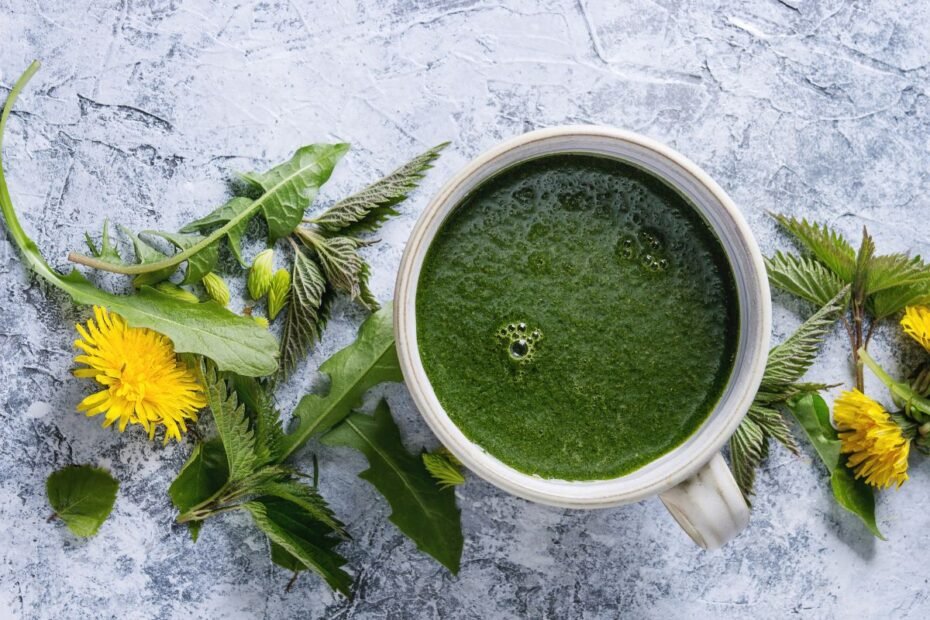
For many people, dandelions are nothing more than an unwelcome weed that frustrates gardeners by spreading across carefully maintained lawns and meadows. Yet experienced herbalists recognize this humble plant as a valuable natural remedy supporting the body in addressing a wide range of health concerns. The next time you consider pulling out this weed from your yard and discarding it, it may be wiser to place it on your plate or press it into dandelion juice instead.
Some individuals may already be familiar with traditional preparations such as dandelion wine or herbal tea made from this plant. However, dandelion juice is another remarkably effective and beneficial way to consume it. Let us explore the advantages of this drink, as well as situations in which experts may not recommend it.
Dandelion Juice – Getting to Know Its Taste
For some people, the idea of dandelion juice may evoke a childhood memory that was not particularly pleasant: when a freshly picked dandelion stem releases a milky, sticky liquid that is difficult to wash off. However, in this case, we are referring to a far more appealing form of the plant—home-made fresh juice.
Dandelion juice has an advantage over many other dandelion-based products. You can extract juice from the entire plant (Taraxacum officinale), including its roots, leaves, and flowers, or from selected parts of it. Other dandelion preparations typically rely on only one portion of the plant. For example:
- Dandelion wine from the flowers;
- Roasted and dried roots as a coffee substitute;
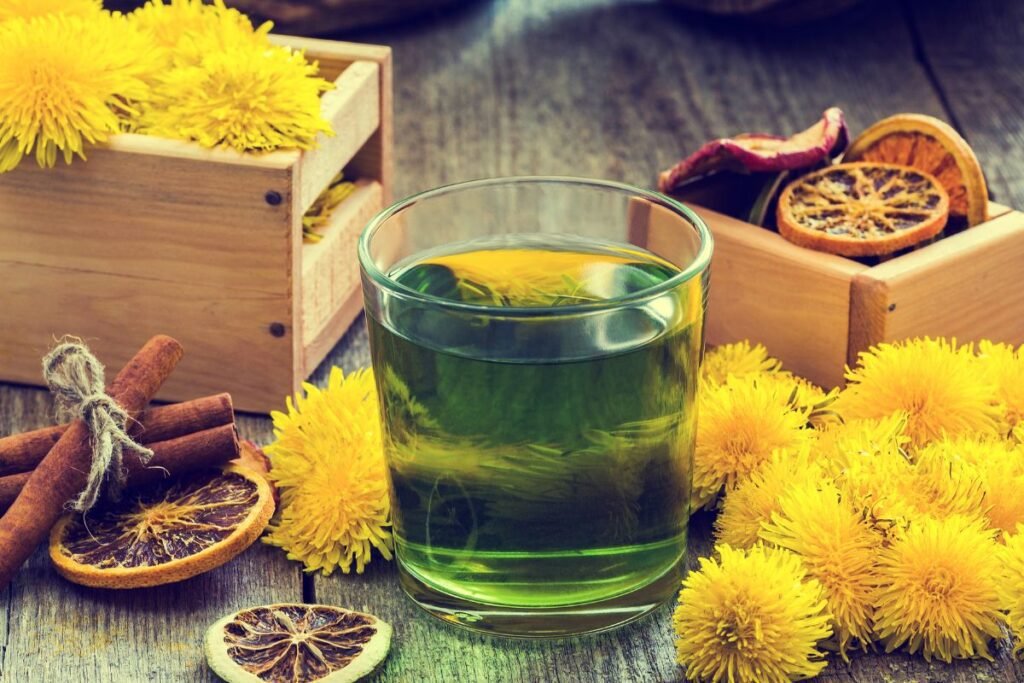
- Teas from leaves or flowers;
- Flower heads for “honey” or jam.
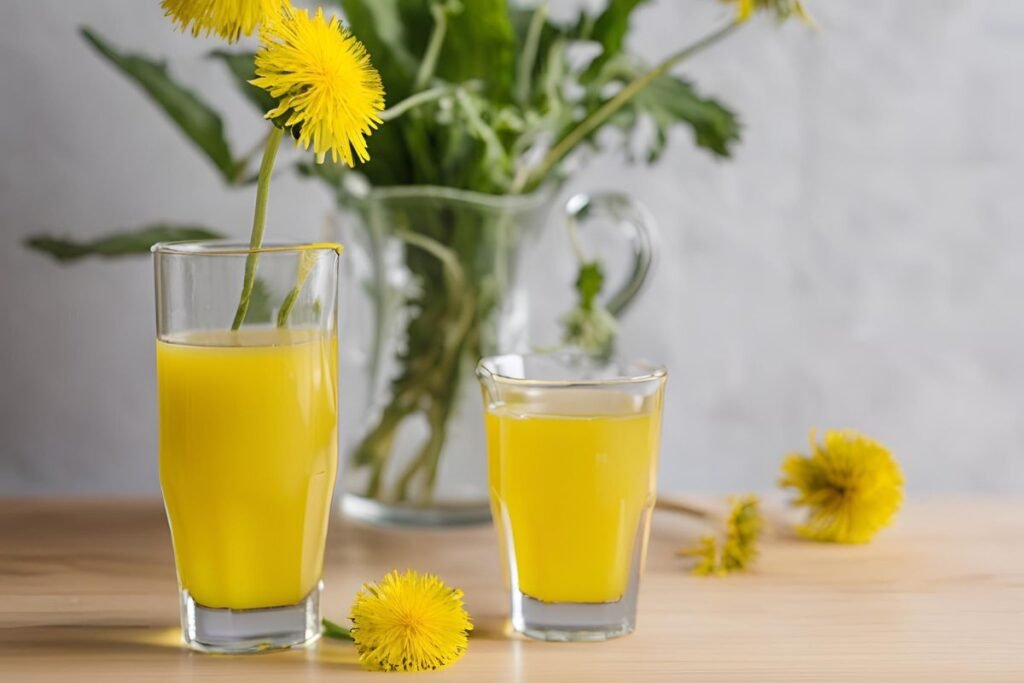
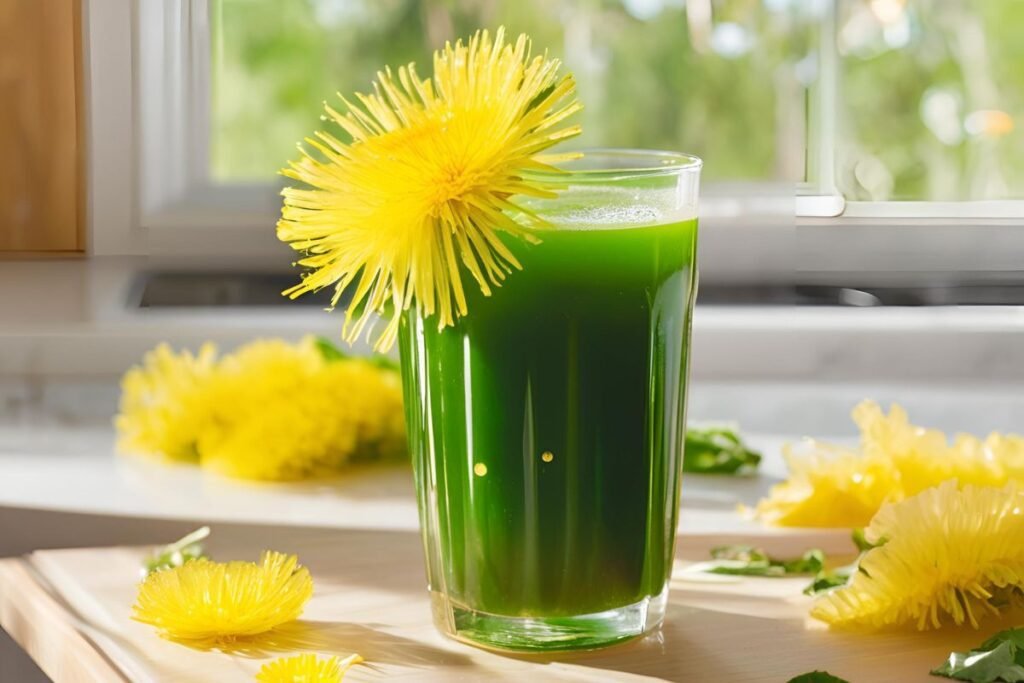
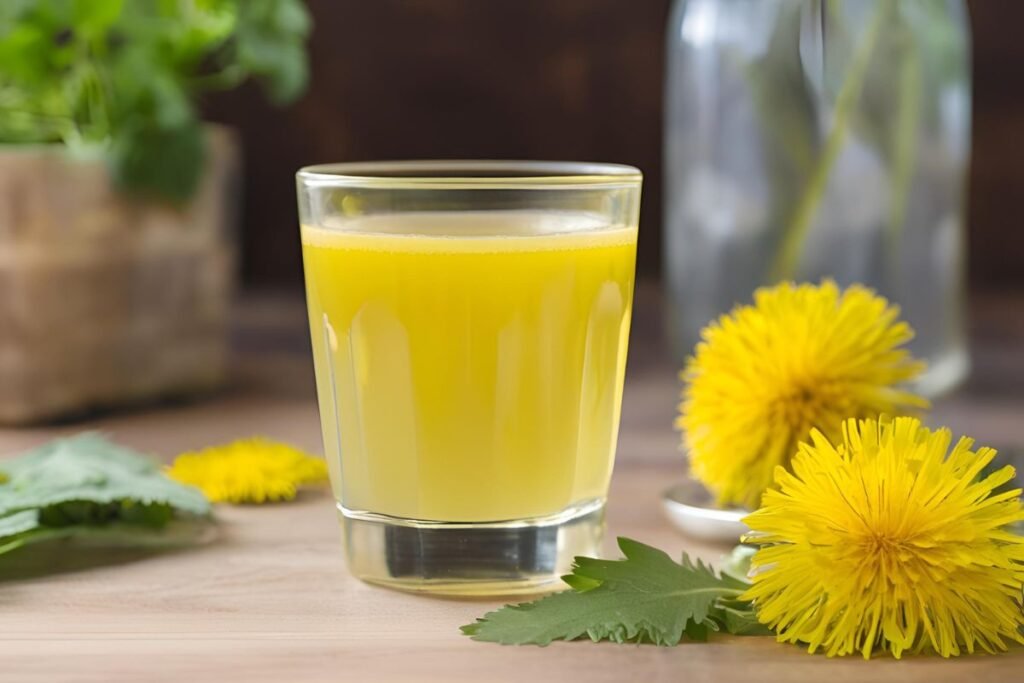
Dandelion juice has a distinct appearance depending on which plant parts people use. When pressed from leaves and stems, the juice is light green or yellow-green. Juice that includes the roots becomes darker, sometimes with a brownish or earthy tone, and may appear slightly cloudy. Juice prepared solely from flowers usually has a golden-yellow color. Nevertheless, people rarely produce it alone because the flowers contain relatively little liquid.
In terms of flavor, this drink is distinctive and memorable. People typically characterized as having a slightly bitter, dry, herbal taste with a mildly astringent quality. Juice made from younger leaves has a gentler bitterness and a flavor that resembles fresh greens or leafy salads. This bitterness is also noticeable in the aroma, which may carry subtle spicy and earthy notes. Juices with root extract has deeper and more earthy scent, sometimes reminiscent of chicory root.
Beneficial Compounds Found in Dandelion Juice
Anyone who still doubts the health potential of dandelion juice may be surprised by the remarkable range of nutrients it contains. A single 100-milliliter serving can provide a wide array of vitamins, minerals, and other essential compounds beneficial to the human body.
| Nutrient | Amount per 100 ml of Dandelion Juice | RDI |
| Calories | 25 kcal | 1% |
| Protein | 2 g | 4% |
| Fat | 1.5 g | 2% |
| Carbohydrates | 7 g | 2% |
| Sugars | 3 g | – |
| Vitamin A | 1130 µg | 125% |
| Vitamin C | 26 mg | 29% |
| Vitamin K | 428 µg | 357% |
| Vitamin E | 1.9 mg | 13% |
| Vitamin B6 | 0.14 mg | 8% |
| Riboflavin (B2) | 0.14 mg | 11% |
| Thiamine (B1) | 0.1 mg | 9% |
| Folate (B9) | 14.9 µg | 4% |
| Calcium | 150 mg | 12% |
| Iron | 2.4 mg | 13% |
| Potassium | 397 mg | 11% |
| Magnesium | 36 mg | 9% |
| Phosphorus | 66 mg | 9% |
| Manganese | 0.34 mg | 15% |
| Zinc | 0.41 mg | 4% |
| Copper | 0.17 mg | 19% |
| Selenium | 0.5 µg | 1% |
| Lutein + Zeaxanthin | 7485 µg | – |
| Beta-carotene | 3219 µg | – |
It is impressive that a simple glass of dandelion juice can supply significant amounts of vitamins—particularly vitamin K, vitamin A, and roughly one third of the daily requirements of vitamin C—as well as numerous important minerals.
In addition, dandelion juice contains dietary fiber, antioxidants, polyphenols, and flavonoids: luteolin and apigenin. It also includes organic acids (including chlorogenic, caffeic, and ferulic acids), inulin, terpenoids, saponins, choline, phytosterols, pectin, and the bitter compound taraxacin.
Together, these substances confer various beneficial biological effects, including antibacterial, detoxifying, diuretic, anti-inflammatory, antioxidant, and potentially anticancer properties. Let us examine how these compounds translate into practical health benefits.
Potential Health Benefits of Dandelion Juice
Herbal practitioners have relied on dandelions in traditional medicine for generations, and modern scientific research has begun to support many of the health claims associated with this plant.
Antioxidant activity. Dandelions are rich in antioxidants (beta-carotene, flavonoids, and polyphenols), which help neutralize free radicals and reduce oxidative stress in the body. Research suggests that these compounds may help protect cells from damage and slow certain processes associated with aging.
Cholesterol regulation. Some animal studies have indicated that dandelion extracts may help reduce levels of total cholesterol and triglycerides while increasing levels of beneficial HDL cholesterol. These effects could potentially contribute to improved cardiovascular health.
Diuretic properties. Dandelions have traditionally been used as natural diuretics, helping the body eliminate excess fluid. A small human study suggested that dandelion extract may increase urine production. Nevertheless, larger and more comprehensive studies are still needed.
Anti-inflammatory effects. Compounds found in dandelions, including taraxasterol and various phenolic acids, exhibit anti-inflammatory properties. Studies conducted on animals indicate that these compounds may help reduce inflammatory responses in the body.
Support for liver health. Extracts derived from dandelion roots may have hepatoprotective properties, meaning they can help protect the liver from damage. Animal studies have demonstrated that these extracts may reduce liver enzyme levels and improve overall liver function.
Relief from hangover symptoms. Both traditional medicine and certain scientific observations suggest that dandelion juice may help alleviate hangover symptoms. Its detoxifying properties are linked to its ability to stimulate liver enzyme activity. The diuretic effect supports the elimination of alcohol metabolites from the body. The high potassium content helps restore electrolyte balance, while its digestive-soothing properties may reduce nausea and promote bile secretion.
How to Prepare Juice from Dandelions
One of the simplest and most effective ways to obtain dandelion juice is to prepare it at home using freshly collected plant material. The juice can be made from leaves, flowers, roots, or a combination of all three.
Ingredients
- 100–200 g of fresh dandelion leaves
- 5–10 dandelion flowers (optional, but they provide a milder and more aromatic flavor)
- 30–50 g of fresh dandelion roots (optional, but valued for their deep cleansing properties)
- 50–100 ml of water to dilute the juice if it is too thick
Preparation
- Dandelion juice can be prepared using either a slow juicer or a traditional method with a blender and cheesecloth or a fine sieve. First, thoroughly wash the plant parts—leaves, flowers, and roots. Allow them to dry and cut larger pieces into smaller sections.
- Slowly press the ingredients through a juicer, or blend them with a small amount of water until a puree forms.
- If necessary, dilute the juice with additional water and strain it through a sieve or cloth.
It is normal for dandelion juice to foam slightly due to enzymes. When the juice is exposed to air, oxidation occurs quickly, which can darken its color and intensify its bitterness.
Fresh juice should ideally be consumed the same day it is prepared. You may store it in the refrigerator for up to 24 hours, although some of its active compounds will gradually diminish over time.

Possible Side Effects
Although dandelion juice is considered natural and potentially beneficial for health, it may produce side effects in certain circumstances—especially when consumed in large quantities, over long periods, or by individuals with specific medical conditions.
| Side Effect | Description / Cause |
| Allergic reactions | Rash, itching, or swelling (especially around the mouth or throat); most common in individuals allergic to plants from the Asteraceae family (such as chamomile or ragweed). |
| Stomach irritation | Excessive acidity or bitterness of the juice may cause stomach pain, nausea, or heartburn. |
| Diarrhea | May occur due to the juice’s mild laxative and bile-stimulating effects. |
| Diuretic effect (fluid loss) | May increase urine production; excessive consumption can lead to dehydration or electrolyte imbalance. |
| Interaction with medications | May strengthen or weaken the effects of certain medications, particularly diuretics, blood-pressure-lowering drugs, and blood thinners. |
| Increased bile secretion | May cause pain or discomfort in people with gallstones or bile duct obstruction. |
| Hyperkalemia (excess potassium) | Occurs rarely, especially when consumed together with potassium-sparing medications. |
People who should exercise caution include:
- Pregnant or breastfeeding women, because experts generally do not recommend consuming dandelion juice for these groups due to insufficient scientific research on its safety.
- Individuals with gallstones or bile duct obstruction.
- People with kidney disease.
- Those taking medications for blood pressure, diuretics, diabetes treatments, or anticoagulant drugs.
- Individuals allergic to plants from the Asteraceae family, such as wormwood, chamomile, sunflower, or milk thistle.
For these individuals, consulting a healthcare professional before consuming dandelion juice is strongly advised.
Sources:
- https://www.healthline.com/nutrition/dandelion-benefits
- https://pmc.ncbi.nlm.nih.gov/articles/PMC9002813
- https://pdfs.semanticscholar.org/63ba/743aac9dcc18785009c701c2d4358e339849.pdf
- https://koreascience.kr/article/JAKO200918839962123.pdf
- https://www.everydayhealth.com/nutritional-supplements/dandelion-101-potential-benefits-risks-and-more
- https://pmc.ncbi.nlm.nih.gov/articles/PMC9720560
Associative photos © Canva.